
Peripheral Artery Disease (PAD) Treatment in Garden Grove
Stronger circulation. Better life. Minimally invasive care at a top vascular clinic in Orange County to open blocked leg arteries, relieve pain with walking and protect your limbs.
Ver esta página en español →
Quick answer: What is PAD?
Peripheral artery disease (PAD) occurs when plaque builds up inside the arteries that carry blood to the legs and feet, narrowing or blocking them. Reduced blood flow can cause leg pain or cramping while walking, numbness, cold feet and slow-healing wounds. At Community Vascular Institute in Garden Grove, CA, PAD is diagnosed with ABI/TBI testing and arterial duplex ultrasound and treated with minimally invasive angioplasty, stenting and atherectomy by interventional radiologist Massoud Arbabzadeh, MD.
Common symptoms of PAD
- Leg pain or cramping while walking (claudication)
- Numbness or weakness in the legs or feet
- Coldness in one lower leg or foot
- Slow-healing sores or wounds
- Changes in skin color
- Weak or decreased pulse in the foot
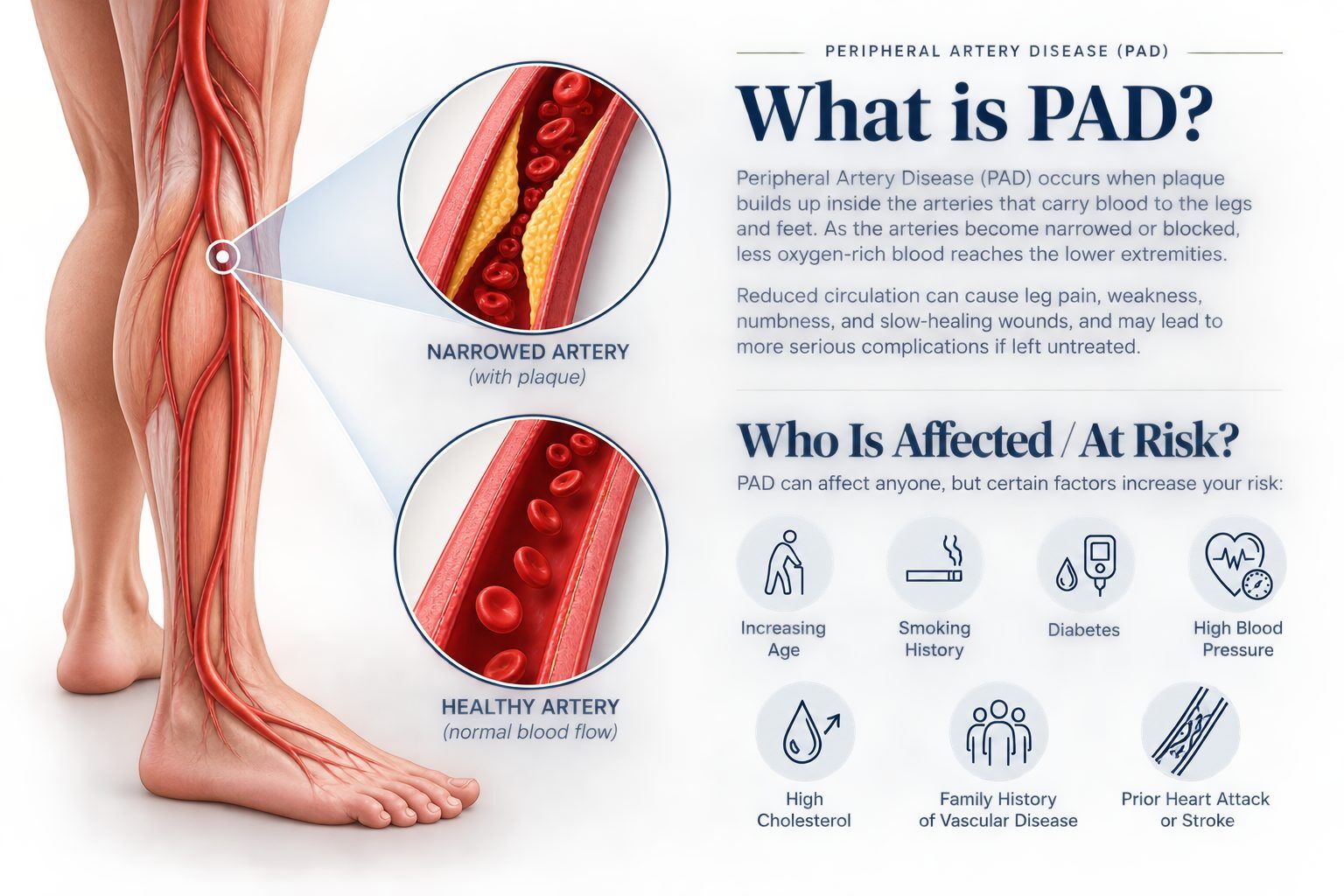
Are you at risk?
PAD becomes more common with age, but certain health and lifestyle factors increase your risk. You may be at greater risk if you have:
- A history of smoking
- Diabetes
- High blood pressure
- High cholesterol
- A family history of vascular disease
- A history of heart disease or stroke
Identifying PAD early can help prevent the disease from progressing and reduce the risk of serious complications.
How we diagnose PAD
Your evaluation begins with an initial consultation to discuss your symptoms, medical history and risk factors. We then assess your circulation to determine whether there may be narrowing or blockage in the arteries supplying your legs and feet.
ABI / TBI testing
An Ankle-Brachial Index (ABI) or Toe-Brachial Index (TBI) compares blood pressure in your ankles or toes with blood pressure in your arms. These simple, noninvasive tests show whether blood flow to the lower extremities is reduced.
Arterial duplex ultrasound
Uses sound waves to evaluate blood flow through the leg arteries, helping locate narrowed or blocked arteries and assess severity.
Angiogram
Uses contrast dye and X-ray imaging for a detailed view of the arteries — identifying the location and severity of a blockage and the most appropriate treatment.
Minimally invasive PAD treatments
We offer minimally invasive treatment options designed to open blocked or narrowed arteries and improve circulation to the legs and feet.
Angioplasty
A small balloon is inflated inside the narrowed artery to compress plaque, open the vessel and improve blood flow.
Stenting
A small mesh tube called a stent is placed inside the artery to help keep it open and maintain blood flow.
Atherectomy
A specialized catheter removes or reduces plaque buildup inside the artery, creating more room for blood to flow.
PAD FAQ
Is PAD treatment painful?
Procedures are performed through a small needle puncture with local anesthetic and light sedation. Most patients feel pressure rather than pain and go home the same day.
Is leg pain when walking just aging?
No. Cramping in the calves, thighs or buttocks that starts with walking and eases with rest (claudication) is a common PAD symptom and should be checked.
Can PAD lead to amputation?
Severe, untreated PAD can progress to critical limb ischemia, non-healing wounds and limb loss. Early diagnosis and restoring blood flow significantly lower that risk.
Does Medicare cover PAD testing and treatment?
Medically necessary vascular testing and PAD procedures are generally covered by Medicare and most insurance plans. Our office verifies your benefits before treatment.
Where can I get PAD treatment in Orange County?
Community Vascular Institute, 12827 Harbor Blvd, Suite G, Garden Grove, CA 92840, offers in-office ABI testing, arterial ultrasound and minimally invasive PAD treatment. Call (562) 236-0650.
Medically reviewed by Massoud Arbabzadeh, MD, Interventional Radiologist, Community Vascular Institute · Last updated October 2026. This page is for education and does not replace an individual medical evaluation.
Leg pain when you walk?
Get an ABI and arterial ultrasound in our Garden Grove office.